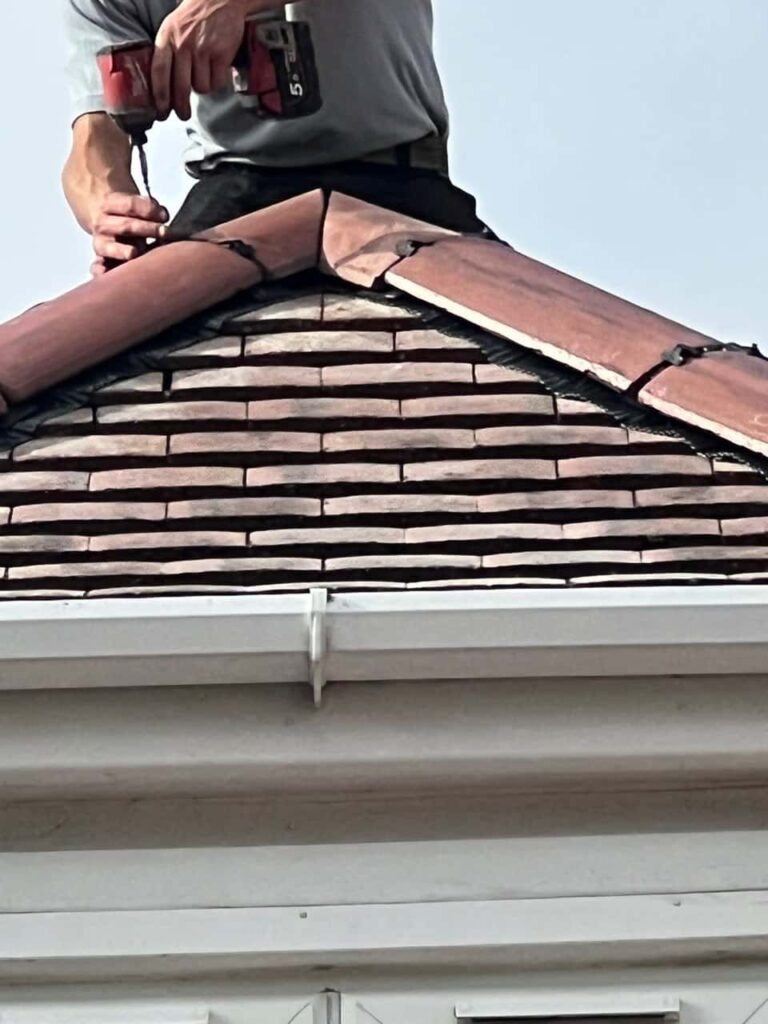
Visible roof damage can make the required repair appear straightforward. A slipped tile, damp ceiling or cracked section of mortar may seem to identify the entire problem. However, the most obvious defect is not always the original cause.
Roofing components work together as a complete system. Water can travel away from its entry point, surrounding materials may have deteriorated, and movement beneath the surface can produce damage elsewhere. For property owners in Calne, Wiltshire, a professional investigation helps ensure that roof repairs address the cause rather than temporarily hiding a symptom.
Why Accurate Roof Diagnosis Comes Before Repair
Water Can Travel Before It Becomes Visible
The position of an internal damp patch does not always correspond with the point where rainwater entered the roof. Moisture may follow underlay, battens, rafters or other structural components before reaching a ceiling or wall.
Repairing directly above the visible stain may therefore leave the true entry point untouched. A roofer should examine the likely path of the water and inspect vulnerable areas further up the roof slope.
A Slipped Tile May Be the Result of Another Problem
Repositioning a slipped tile can restore the visible covering, but the reason it moved should also be established. Common underlying causes include:
- Failed or corroded fixings
- Damaged battens
- Deteriorated tile nibs
- Movement within neighbouring tiles
- Poor previous installation
- Exposure to strong winds
If the supporting components are defective, replacing or realigning the tile alone may not prevent further movement.
Cracks Can Indicate Movement Beneath the Surface
Cracked mortar around ridge tiles, verges or other junctions may result from ageing and weather exposure. It can also indicate movement within the surrounding roof structure or failure of the original bedding.
Covering a crack without removing unstable material may create a short-lived repair. The area should first be assessed to determine whether the problem is confined to the surface or affects the complete junction.
Several Defects Can Produce the Same Symptom
A ceiling stain may be caused by a broken tile, defective flashing, damaged underlay, a leaking valley or a problem around a roof penetration. These faults can appear very similar from inside the property.
Accurate diagnosis prevents unnecessary work on sound areas and ensures that the correct roofing component receives attention. It is particularly important where no obvious damage can be seen from ground level.
The Surrounding Materials May Also Be Affected
A visible opening may have allowed moisture to enter for some time before internal signs appeared. Battens, underlay, insulation and accessible timbers around the defect should therefore be checked where appropriate.
This does not mean that extensive work will always be necessary. It allows the roofer to define the actual scope of the problem and avoid leaving concealed deterioration behind a repaired outer covering.
Weather Conditions Provide Useful Evidence
When and how a roofing problem appears can help identify its source. A leak occurring only during wind-driven rain may suggest a vulnerable junction or displaced covering. Water ingress during prolonged rainfall can point towards a valley, drainage issue or gradual saturation.
Useful information includes:
- Whether the problem occurs during every rainfall
- The direction of the wind when the leak appears
- How quickly moisture becomes visible
- Whether the affected area expands over time
- Whether previous repairs changed the pattern
Combining these details with a physical inspection gives a clearer understanding of the defect.
Previous Repairs Need to Be Considered
Repeated problems do not always mean that the same repair has failed. The original source may have been missed, water may be entering through another nearby defect, or deterioration may have spread into connected materials.
A roofer should examine previous repair areas and assess how they interact with the wider roof. This helps avoid adding another patch without understanding why earlier work did not provide a lasting result.
A Proper Inspection Considers the Whole Roofing System
The visible damage should be assessed in relation to the surrounding roof. Depending on the symptoms, this may include examining:
- Tiles or slates
- Battens and underlay
- Ridge and hip details
- Valleys and drainage routes
- Leadwork and flashing
- Chimney junctions
- Roof windows, vents and pipes
- Accessible areas within the roof space
This systematic approach allows the roofer to distinguish an isolated defect from a wider pattern of deterioration.
Diagnosis Helps Determine the Correct Scope of Repair
Some roof problems genuinely require only a focused repair. Others involve several connected components and need a broader solution.
Investigating the cause first prevents both under-repairing and unnecessary work. It helps determine which materials should be removed, what must be restored underneath and how the finished repair should integrate with the surrounding roof.
Why Symptom-Only Repairs Often Fail
A surface patch may temporarily stop water from appearing, but it cannot correct a failed fixing, unstable batten or poorly formed junction beneath it. Moisture may continue entering or simply find a different route.
Repeated patching can also make future diagnosis more difficult by concealing the original construction. A well-planned repair begins with evidence, corrects the underlying fault and then restores the visible roof covering.
Conclusion
Visible damage is an important clue, but it does not always reveal why a roof problem developed. Water movement, concealed deterioration, failed fixings and defects at nearby junctions can all contribute to the symptoms seen from inside or outside the property.
A professional investigation allows the underlying cause and full extent of the damage to be established before repairs begin. If your roof in Calne, Wiltshire, is leaking or showing visible deterioration, contact LJ Roofing Calne to arrange an assessment and receive clear guidance on the appropriate repair.
Call us on: 01249 477 793
Click here to find out more about Roofing Calne
Click here to complete our contact form and see how we can help with your roofing needs.